Latest Post
What Can You Save on a new Gas Boiler?
March 28, 2025
LD Eco Blog

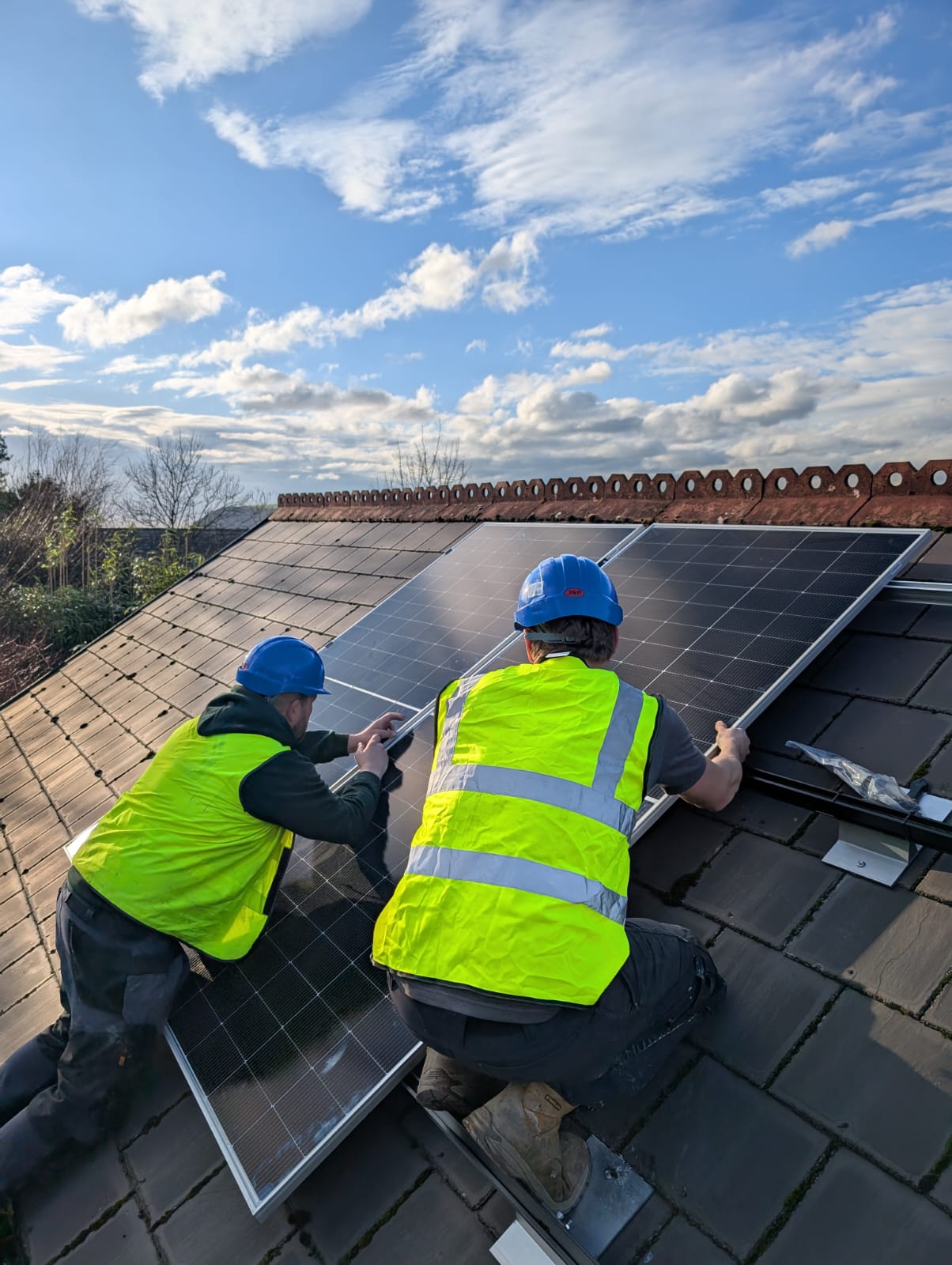
Does Solar Work in Welsh Weather?
When thinking about solar panels in Wales, one question comes up again and again: “Will solar even work here with all the clouds and rain?”
The short answer is yes, solar panels will perform in Welsh weather, even on cloudy days. The growing number of installations across the country proves it. In this post, we’ll explore how solar works in Wales, what the data says, and which areas are leading the way in solar adoption.
How Solar Panels Work in Cloudy Conditions
Many people believe solar panels only work in sunshine, but that’s a misconception. Modern photovoltaic (PV) panels generate electricity from daylight, not heat. This means even on cloudy or rainy days, solar panels still produce usable energy.
Data from Welsh solar installations shows:
Annual output typically ranges from 830-980 kWh (Kilowatt hour) per kWp (Kilowatt peak) installed. South Wales usually has the highest output (about 920-980 kWh/kWp), while mid and north Wales still achieve respectable results (about 860-910 and 830-890 kWh/kWp respectively).
Seasonal Performance: What to Expect Over the Course of the Year
Solar output in Wales varies naturally by season. Summer months produce the most energy, sometimes exceeding expectations on clear days. Winter months produce less, but still a meaningful amount. No matter the season, solar PV will always produce energy. A system designed correctly will account for these seasonal changes, ensuring that homeowners continue to see energy generation throughout the year.
Wales Is Leading the UK in Solar Installations
Wales isn’t just installing solar, it’s leading the UK in uptake per capita. Recent figures show over 15,400 new solar PV installations in 2024. This equates to about 500 systems per 100,000 people. The total solar PV capacity in Wales now exceeds 1.3 GW (Gigawatts) across more than 86,000 projects. These numbers show that solar works reliably in variable Welsh conditions and that homeowners trust it as a long-term, efficient energy solution.
Top Welsh Areas for Solar Adoption
Some areas in Wales have seen particularly strong solar adoption. Below are a list of the councils in Wales that have high numbers of domestic solar PV installations:
- Powys- 1,466
- Carmarthenshire- 1,373
- Gwynedd- 1,118
- Pembrokeshire- 1,076
- Isle of Anglesey- 979
Urban areas like Cardiff and Swansea have fewer installations due to housing density and roof constraints. However, solar performance is just as strong in these areas. It’s the environment, not the weather, that matters most.
Why Solar Works in Wales- Regardless of the Weather
Light still generates power. For solar panels to work, constant, direct sunshine isn’t needed. High efficiency panels and smart inverters means modern technology is optimised to improve performance in your home, even on cloudy days. Solar systems are designed with winter and summer outputs in mind, allowing the solar network to predict any seasonal variation. Battery storage increases usable energy, storing daytime solar for evening use helps boost self-consumption.
Even under grey skies, Welsh homes can generate substantial electricity to cut energy bills, improve home efficiency, and reduce reliance on the grid.